
How to Install Glock Night Sights with a Sight Pusher Tool
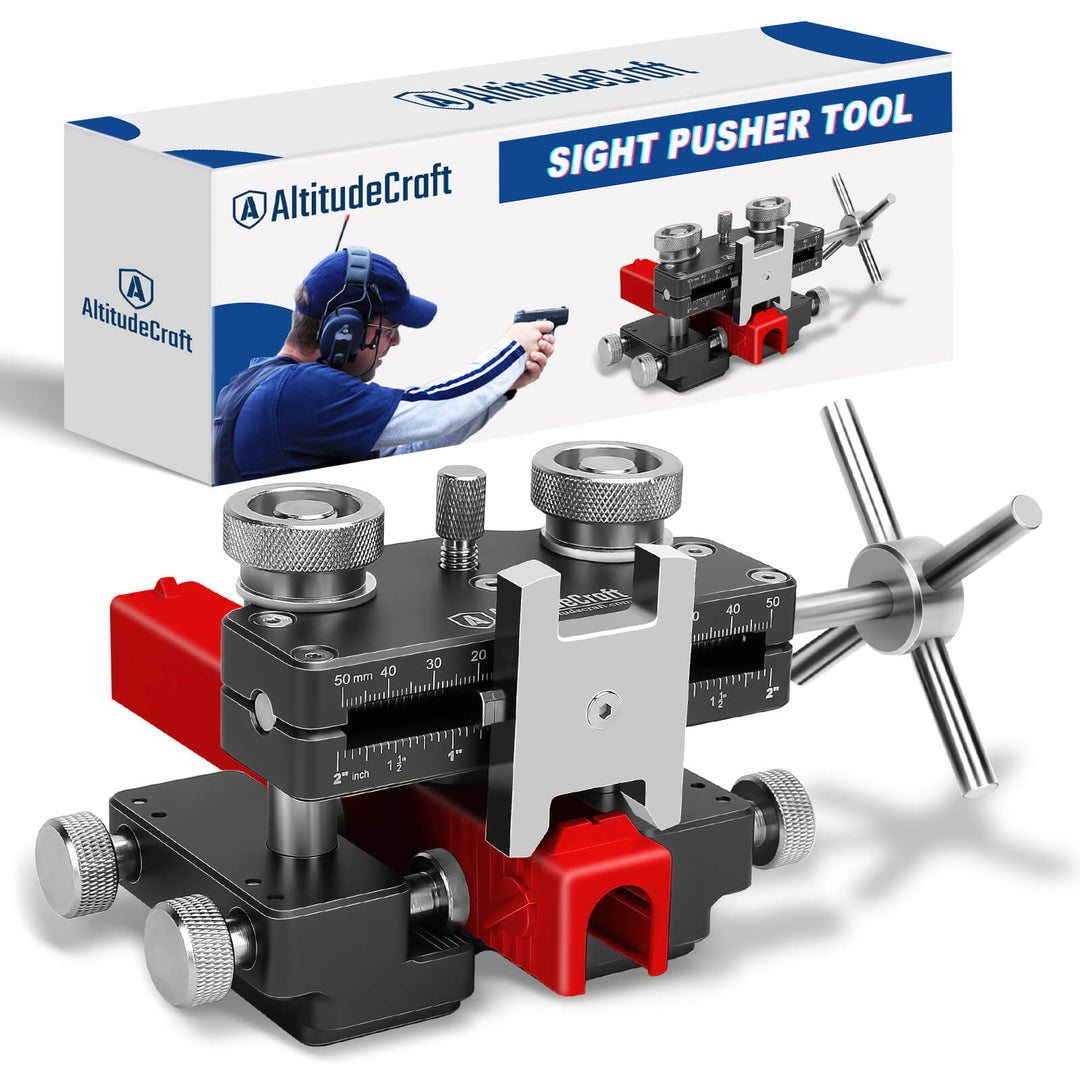
Installing night sights on a Glock is one of the most impactful upgrades you can make — and with a sight pusher tool, you can do it yourself in under 15 minutes without risking damage to your slide or sights. No gunsmith visit, no $40-$75 installation fee, and no waiting a week to get your pistol back.
Key Takeaway: Installing Glock night sights with a sight pusher tool takes 15–30 minutes and requires no gunsmithing experience. The process involves removing the slide, clamping it in the sight pusher, and slowly pushing out the old rear sight from left to right, then pushing the new sight in from right to left. Front sights require a 3/16” nut driver and blue Loctite 242 on the mounting screw. The most common mistake is using excessive force on a staked factory rear sight — apply penetrating oil and wait 5 minutes before pushing. Tritium night sights have a usable life of 10–15 years (tritium half-life: 12.3 years) and cost $60–$150 depending on brand. A dedicated Glock sight pusher ($35–$50) pays for itself versus a single gunsmith visit ($50–$75), and the same tool works across all Glock models from G17 to G48 MOS including suppressor-height sights for red dot co-witnessing.
This guide covers the complete process: tools needed, step-by-step rear and front sight installation, proper alignment, and the mistakes that scratch slides or break tritium vials. Whether you're installing Trijicon HD XR, Ameriglo Bold, or Night Fision Optics Ready sights, the process is the same.
Why You Need a Sight Pusher (Not a Hammer and Punch)
Glock rear sights are press-fit into a dovetail — a trapezoidal channel machined into the top of the slide. The sight must be driven horizontally with controlled, even pressure. Here's why a sight pusher is the only proper tool for the job:
| Method | Risk Level | Precision | Slide Damage | Cost |
|---|---|---|---|---|
| Sight Pusher Tool | Low | High — threaded screw gives fine control | None if used correctly | $30-$80 one-time |
| Brass Punch + Hammer | Medium-High | Low — one hard strike can overshoot | Scratches, dents possible | $10-$15 |
| Pliers / Vise | High | None — no directional control | Crushed sight, marred finish | Already owned |
| Gunsmith | None | Professional | None | $40-$75 per visit |
A sight pusher pays for itself after a single installation. If you own multiple Glocks or swap sights seasonally (competition vs carry), it's an essential workshop tool.
Tools and Materials You'll Need
Required
- Sight pusher tool — compatible with your Glock model's dovetail width
- Glock front sight tool (3/16" nut driver or Glock-specific wrench) — for the front sight screw
- Blue threadlocker (Loctite 242 or 243) — for the front sight screw. See our complete Loctite and torque guide for application details
- Your new night sights — confirm compatibility with your specific Glock model before starting
Recommended
- Degreaser / rubbing alcohol — to clean the dovetail channel
- Painter's tape or masking tape — protects slide finish around the dovetail
- Light machine oil — a single drop in the dovetail eases sight movement
- Torque wrench (inch-pounds) — front sight screw torque is 12-15 in-lbs per Glock spec
Step-by-Step: Removing Factory Glock Sights
Safety First
Clear the firearm completely. Remove the magazine, lock the slide back, visually and physically inspect the chamber. Remove the slide from the frame — you'll work on the slide only. There is zero reason to have the slide on the frame during sight installation.
Removing the Rear Sight
- Secure the slide in the sight pusher. The slide sits in the tool's cradle with the dovetail aligned with the pusher screw. Most sight pushers have adjustable clamps — tighten until the slide cannot shift, but don't over-tighten (you can flex a slide if you crank it down too hard).
- Apply painter's tape around the dovetail area. This protects your slide's finish from any contact with the pusher shoe or debris.
- Position the pusher shoe against the sight. The shoe (the flat contact piece on the screw) should press squarely against the side of the sight. Off-center contact can crack the sight or gouge the slide.
- Turn the screw slowly. Use steady, even pressure. The factory sight will resist initially — this is normal. Glock factory sights are staked tightly and often have thread locker compound in the dovetail.
- Push the sight completely out of the dovetail. Continue turning until the sight clears the opposite side. Don't stop halfway and try to pull it — the dovetail is tapered and the sight needs to go all the way through.
Stubborn sight tip: If the factory sight won't budge after firm pressure, apply a single drop of penetrating oil (PB Blaster or Kroil) to the dovetail junction and wait 10 minutes. Do NOT hit the pusher with a hammer — this defeats the purpose of using a precision tool.
Removing the Front Sight
- Flip the slide upside down. The front sight is held by a single screw accessible from inside the slide.
- Use the 3/16" nut driver or Glock front sight tool. Insert it into the hex head of the front sight screw.
- Turn counter-clockwise to remove. If Loctite was applied at the factory (it usually is), you may need to apply firm downward pressure while turning. Do not use excessive force — if it won't break free, a heat gun at low setting for 15-20 seconds softens the Loctite.
- Lift the front sight off. Once the screw is out, the front sight pulls straight up.
Step-by-Step: Installing New Night Sights
Preparing the Dovetail
Before installing new sights, clean the dovetail channel:
- Use a cotton swab with rubbing alcohol or brake cleaner to remove old Loctite residue, oil, and debris
- Inspect for burrs or damage — a clean, smooth channel ensures proper sight fit
- Apply a thin film of light oil (one drop, spread with your finger) to the dovetail — this reduces friction during installation and prevents galling
Installing the New Rear Sight
- Confirm sight orientation. Night sights have a specific left-to-right direction. Most Glock rear sights enter from the right side of the slide (as viewed from the rear). Check your sight manufacturer's installation instructions to confirm — getting this wrong means you'll push it all the way through and have to start over.
- Start the sight into the dovetail by hand. It should begin to enter with finger pressure. If it won't start at all, check that you're entering from the correct side and that the dovetail is clean.
- Secure the slide in the pusher and position the shoe. The pusher shoe should contact the sight evenly across its full width.
- Push the sight in slowly. Turn the screw with steady pressure. Watch the sight's position relative to the slide — you want it centered.
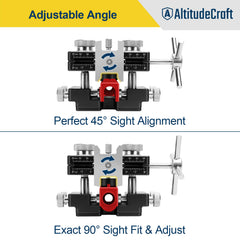
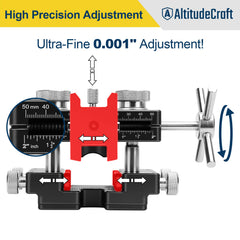
- Check centering frequently. Stop every few turns and look at the sight from the rear. The rear sight notch should be centered over the slide. Most sight pushers let you make micro-adjustments — this is where the tool's precision matters.
Installing the New Front Sight
- Apply blue Loctite (242/243) to the front sight screw threads. One small drop is enough — excess Loctite can wick into the sight body or slide channel.
- Place the front sight on the slide. Align the screw hole in the sight with the hole in the slide.
- Thread the screw in from underneath the slide. Start by hand to avoid cross-threading.
- Torque to 12-15 in-lbs. This is Glock's recommended specification. Over-torquing can crack the sight post or strip the threads. If you don't have an inch-pound torque wrench, tighten until snug plus 1/4 turn — it should feel firmly seated but not require significant force.
- Allow Loctite to cure. Blue Loctite reaches handling strength in 20 minutes and full cure in 24 hours. Avoid shooting or handling the front sight aggressively for 24 hours.
For detailed torque specifications across all Glock optic and sight mounting applications, refer to the Night Fision Glock installation guide.
Checking Sight Alignment After Installation
After both sights are installed, verify alignment before reassembling the pistol:
Visual Alignment Check
- Hold the slide at eye level and look through the rear sight notch at the front sight
- The front sight post should be centered in the rear sight notch with equal light gaps on both sides
- The top of the front sight should be level with the top of the rear sight (for sights designed for a "combat hold" — some night sight sets use a different height relationship)
Adjusting Windage (Left-Right)
If the rear sight is off-center:
- Put the slide back in the pusher and nudge the rear sight in the needed direction
- Small adjustments only — 1/4 turn of the screw at a time
- Remember: move the rear sight in the direction you want your point of impact to move (rear sight right = hits move right)
After installation, you'll need to confirm zero at the range. Our zeroing guide covers the process for both iron sights and red dots.
Night Sight Brands: What to Know Before You Buy
| Brand | Popular Model | Tritium Life | Dovetail Fit | Price Range |
|---|---|---|---|---|
| Trijicon | HD XR | 12+ years | Tight — may need extra pusher pressure | $120-$160 |
| Ameriglo | Bold / Spartan | 12 years | Standard — smooth installation | $80-$120 |
| Night Fision | Optics Ready Stealth | 15+ years | Standard — consistent fit | $90-$130 |
| Truglo | TFX Pro | 12 years (fiber + tritium) | Standard | $100-$140 |
| XS Sights | R3D 2.0 | 12 years | May require filing to fit | $100-$140 |
All of these brands use standard Glock dovetail dimensions and work with a standard sight pusher tool. If you're also running an optic on a MOS slide, check our adapter plate guide for co-witness height recommendations.
Common Mistakes During Glock Sight Installation
1. Pushing the Rear Sight in from the Wrong Side
Glock dovetails are not symmetrical — most rear sights are designed to enter from the right side. Pushing from the wrong side can damage the sight or jam it partway. Always check the manufacturer's instructions first.
2. Over-Torquing the Front Sight Screw
The front sight screw is small (M3.5 or similar). Torquing beyond 15 in-lbs risks stripping the threads or cracking the sight post. Use blue Loctite — it provides the thread security, not raw torque.
3. Skipping Loctite on the Front Sight
Without threadlocker, the front sight screw will vibrate loose after 200-500 rounds. You'll discover this when your front sight flies off during a range session. Always use blue (not red) Loctite — red requires heat to remove.
4. Not Centering the Rear Sight
Pushing the rear sight in without checking alignment means your point of impact will be off. Check centering every few turns of the pusher screw. The difference between "centered" and "close enough" is 4-6 inches at 25 yards.
5. Using the Wrong Tool Entirely
Flat-head screwdrivers, channel locks, and C-clamps are not sight installation tools. We've seen slides with gouged dovetails, cracked factory sights, and damaged finishes — all from improvised tools. A proper sight pusher tool costs less than a single gunsmith visit.
Sight Pusher Compatibility: Which Glocks Fit?
Standard Glock sight pushers work with all Glock models that use the standard Glock dovetail, including:
- Full-size: G17, G22, G31, G34, G35, G37
- Compact: G19, G23, G32, G38
- Subcompact: G26, G27, G33, G39
- Slimline: G43, G43X, G48
- MOS models: G17 MOS, G19 MOS, G43X MOS, G45 MOS — same rear dovetail; the MOS cut is for the optic, not the iron sights
- How to Replace Glock Factory Sights with a Sight Pusher
- Glock Sight Pusher FAQ
- AltitudeCraft vs Wheeler Sight Pusher
- Glock Sights Stuck or Crooked? Troubleshooting
- Best Night Sight Upgrades for Glock
If you're upgrading a MOS model, you may also want to consider whether your new night sights will co-witness with your red dot optic. Lower-1/3 co-witness is the most popular configuration for carry guns.
Browse our complete tool collection for Glock-compatible accessories.
Frequently Asked Questions
Do I need to remove the slide from the frame?
Yes, always. Working on a complete pistol is unsafe and makes sight installation much harder. Remove the slide per your Glock's disassembly procedure — it takes 10 seconds and eliminates any safety concern.
Can I reuse factory Glock sights after removal?
Yes, factory polymer sights and steel sights can be reused if they're undamaged. The dovetail is a friction fit — there's no permanent modification. Keep your factory sights as backups.
How long do tritium night sights last?
Tritium has a half-life of 12.3 years. Most manufacturers guarantee usable brightness for 10-15 years. After that, the sights still function as standard sights — only the glow dims. Tritium is sealed and cannot leak or be depleted by exposure to light (unlike phosphorescent/glow-in-the-dark paint).
My new sight is too tight for the dovetail. What do I do?
Some manufacturers (notably XS Sights R3D 2.0) intentionally make sights slightly oversized for a tighter lock-up. If the sight won't start into the dovetail with moderate pusher pressure: (1) verify you're entering from the correct side, (2) clean the dovetail thoroughly, (3) apply a drop of oil. If it still resists, the sight may need minor filing — follow the manufacturer's filing instructions precisely. Do not force it with excessive pressure.
Should I use red or blue Loctite on the front sight screw?
Always blue (medium strength). Blue Loctite (242/243) allows future removal with hand tools. Red Loctite (271/272) is permanent — it requires heating to 500°F+ to break free, which can damage tritium vials and sight coatings.
Can I install suppressor-height sights with the same sight pusher?
Yes. Suppressor-height (tall) sights use the same Glock dovetail — only the sight post height is different. The installation process is identical. These are commonly used for co-witnessing with red dot optics on MOS slides.
📖 Part of our Sight Pusher Tool Complete Guide — Explore all our guides covering tool selection, installation, troubleshooting, and sight upgrades.
Disclosure: AltitudeCraft manufactures the sight pusher tool referenced in this guide. The installation steps described are universal to any quality Glock sight pusher. Night sight brands mentioned (Trijicon, AmeriGlo, XS Sights, Night Fision) are evaluated based on publicly available specifications and user reviews.
Last updated: March 2026. This article is reviewed and updated regularly to reflect current products, pricing, and industry standards.
Related Articles
Sight Pusher Tool Complete Guide: How to Install Glock Sights Like a Pro (2026)
Apr 02, 2026
Strut Spreader Tool Complete Guide: DIY Suspension Work Made Easy (2026)
Apr 02, 2026
Thread Checker Complete Guide: Identify Any Bolt Size in Seconds (2026)
Apr 02, 2026
Glock 43X MOS Complete Red Dot Guide: Optics, Adapter Plates, and Setup (2026)
Apr 02, 2026


Leave a comment
All blog comments are checked prior to publishing