

CBTO vs COAL: Why Your Seating Depth Measurements Don't Match the Load Manual


Featured in this guide
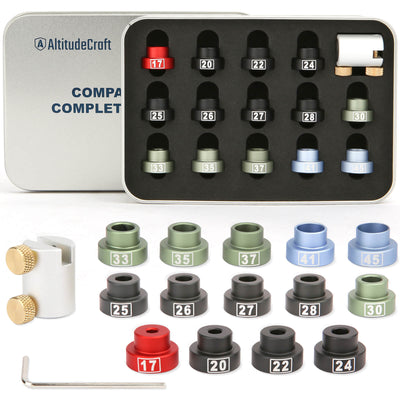
AltitudeCraft Bullet Comparator Kit with 14 Inserts
$45.99
Free shipping & free returns on US orders $25+
Add to cartYou measured your seating depth, checked it against the load manual's COAL, and the numbers don't match — even though nothing about your load changed. That mismatch is normal, and it comes down to where each measurement is taken: cartridge overall length (COAL) reads from the case base to the bullet tip, while cartridge base to ogive (CBTO) reads from the case base to the bullet's ogive, the curved point where it reaches full bore diameter. Bullet tips vary enough from round to round that COAL is an unreliable reference for precision seating depth. A bullet comparator and headspace gauge kit reads CBTO directly so your seating depth tracks the bullet's actual contact point instead of its tip.
Key Takeaway
Cartridge overall length (COAL) measures from the case base to the bullet tip, while cartridge base to ogive (CBTO) measures from the case base to the bullet's ogive, where its curved nose first reaches full bore diameter. The two disagree because bullet tips vary in length and shape round to round, even within the same box, while the ogive stays far more consistent. A load manual's COAL is a magazine-fit reference, not a precision seating-depth target, so seating to a book COAL can leave a different jump to the rifling than the load was developed with. A bullet comparator holds an insert against the ogive so calipers read a repeatable distance instead of the inconsistent tip. Because inserts differ by brand and bore diameter, one CBTO reading is only comparable to another taken with the same insert and the same zeroing method.
The tool for this job
AltitudeCraft Bullet Comparator Kit with 14 Inserts
$45.99
Free shipping & free returns on US orders $25+
Add to cartWhat's the Difference Between Base-to-Ogive (CBTO) and Overall Length (COAL)?
Cartridge overall length (COAL) is measured from the case base to the bullet tip. Cartridge base to ogive (CBTO) is measured from the case base to the ogive, the curved point where the bullet reaches full bore diameter. CBTO, not COAL, determines how far the bullet actually sits from the rifling.
If you're not sure which tool you need before going further, our headspace gauge vs. headspace comparator vs. case gauge comparison sorts that out first; the rest of this guide assumes a bullet comparator, the tool built to read CBTO.
The bullet tip does not touch the rifling first — the ogive does. A caliper measuring to the tip is measuring a part of the bullet with no fixed relationship to where it actually engages the lands, because tip length and shape vary between individual bullets, sometimes noticeably within the same box. The ogive is a more tightly manufactured surface, and bodies like SAAMI, which publish the official cartridge and chamber dimension drawings each caliber is built to, define maximum COAL mainly around magazine length and chamber clearance — not around the ogive. That mismatch between what COAL is built to protect and what seating depth actually needs is the root of why the two numbers disagree.

Why Doesn't My CBTO Match the Load Manual's Cartridge Overall Length?
Your CBTO and a load manual's COAL disagree because COAL is a magazine-fit reference built from one sample bullet's tip, not a precision seating-depth target, and bullet tips vary enough between individual rounds — sometimes by several thousandths — that COAL alone can hide or fake a real seating-depth change.
This is a documented limitation of tip-based measurement, not a flaw in your technique. As AltitudeCraft's own comparator kit listing puts it: "Measuring cartridge lengths at the bullet tips is unreliable and often varies by up to .025 inch between rounds. The bullet comparator measuring tool equipment provides consistent and precise measurements by measuring from the ogive." A .025 inch swing from tip measurement alone is larger than most seating-depth adjustments reloaders make on purpose, so a COAL-only measurement can mask a real seating-depth change or manufacture a fake one.
Part of the gap is built into the standard itself, not a defect on either side. SAAMI's published drawings follow a specific convention: chamber dimensions are specified at minimum material condition (the tightest legal chamber a rifle can have), while cartridge dimensions are specified at maximum material condition (the largest legal round that must still function). Because those two drawings are deliberately specified from opposite ends of the tolerance range, some gap between a book COAL figure and what you actually measure off your own ammunition in your own chamber is expected, not an error in your measuring.
Reloading manuals print COAL because every reloader can check it against magazine length without owning a comparator, and because one COAL figure has to apply across many bullets from many makers — it was never meant to be the precision reference for tuning seating depth in one specific rifle. CBTO, measured consistently with one comparator insert, is the number that actually tracks your distance to the rifling from load to load.
Why Does My Bullet Comparator (CBTO) Reading Change When I Switch Inserts?
Your CBTO changes between comparators because each insert contacts the bullet's ogive at a slightly different point, set by the insert's own bore diameter. That's not measurement error — it's a different reference point. A CBTO reading only means something next to another reading taken with the same insert.
Comparator inserts contact the bullet ogive at a specific diameter band set by the insert's own bore. Two inserts marketed for the "same" caliber can be bored to slightly different diameters, so each one contacts the ogive at a slightly different point. A CBTO of 2.210 inches from one comparator and 2.215 inches from another, on the identical cartridge, aren't a measurement error — they're two different, equally valid reference points that simply aren't interchangeable. For 6.5 Creedmoor specifically, insert and bushing sizing plus a worked shoulder-bump setup is covered in our 6.5 Creedmoor comparator setup guide.
The practical rule follows directly: once you pick a comparator and insert for a given rifle and bullet, keep using that exact combination for every CBTO reading on that load. Don't compare your CBTO to a number someone else posted online unless they used the same insert and the same zeroing method. Your own number, measured consistently, is the only one your seating depth should be judged against.

How Do You Measure CBTO Correctly?
Measuring CBTO correctly takes four steps: pick the comparator insert sized for your bullet's diameter, zero your calipers with the insert attached, seat the insert against the bullet's ogive while holding the cartridge straight, and read the caliper with the insert still fully seated. Repeat the same steps every time to keep readings comparable.
- Pick the right insert for your bullet diameter. Inserts are sized to a bullet diameter range, not to a caliber name, so check the diameter stamped on your bullet box against the insert's rated range. A 14-insert kit spanning roughly .172 to .458 inch covers most common rifle and pistol bullet diameters; our insert chart lists which insert matches which cartridge.
- Zero the calipers with the insert attached. This is the step reloaders skip most often. If you zero your calipers bare and then attach the insert, every reading afterward is off by the insert's own thickness, and the error is consistent — which makes it easy to miss because your numbers still look repeatable.
- Seat the cartridge into the insert, not the insert onto the cartridge. Hold the cartridge vertically, lower it into the insert so the ogive settles against the insert's internal taper, and keep the cartridge axis aligned with the caliper jaws. A tilted cartridge reads short.
- Read the caliper with light, even contact. Let the insert and bullet settle under their own weight rather than pressing the caliper jaws together. Take three readings per cartridge; if they vary by more than about .002 inch, you're probably tilting the cartridge or seating the insert inconsistently. A widely used 6-inch digital caliper, such as Mitutoyo's 500-series, displays to .0005 inch but is only rated accurate to about ±.001 inch — the display resolution isn't the same as measuring accuracy, and either way the three-reading spread above is checking your technique, not your tool's limits.
For more background on measurement practice during reloading generally, see Norma Academy's introduction to reloading, Part 6. This article covers measurement method only — it does not recommend a specific jump-to-the-lands distance for any rifle or cartridge. Seating depth near the lands should be worked up gradually and verified against your own chamber and a current reloading manual, not copied from an article.

What Mistakes Do Reloaders Make When Switching from COAL to CBTO?
Reloaders switching from COAL to CBTO most often zero their calipers before attaching the insert, compare CBTO numbers from different comparators as if they were interchangeable, skip re-checking shoulder bump after changing rifles or bullets, or tilt the cartridge in the insert. Each mistake produces a wrong-looking number, not a wrong cartridge.
| Mistake | What happens | Fix |
|---|---|---|
| Zeroing calipers before attaching the insert | Every CBTO reading is off by the insert's thickness, consistently, so it looks "precise" but is wrong | Attach the insert first, then zero the calipers against a flat surface or a gauge block |
| Comparing CBTO numbers from different comparators | Two valid readings look like a measurement error because the inserts contact the ogive at different points | Only compare CBTO to past readings taken with the exact same comparator and insert |
| Switching bullets or rifles without re-checking shoulder bump | A CBTO that was safe clearance in one chamber can be a hard touch in another | Re-check headspace and shoulder bump for the new rifle or bullet before relying on an old CBTO number |
| Tilting the cartridge in the comparator insert | Readings run short and inconsistent from one try to the next | Keep the cartridge axis aligned with the caliper jaws and let the insert settle under its own weight |
The second row is worth repeating: switching comparator brands mid-project is the single most common reason reloaders think their seating depth "moved" when nothing about the cartridge changed at all.

How Do CBTO and COAL Compare for Seating Depth?
COAL and CBTO differ in reference point, consistency, and purpose: COAL measures to the bullet tip and mainly confirms magazine fit, while CBTO measures to the ogive and tracks real seating depth. The table below lines up both measurements side by side.
| COAL (cartridge overall length) | CBTO (cartridge base to ogive) | |
|---|---|---|
| Reference point on the bullet | Bullet tip | Ogive (first point of full bore diameter) |
| Round-to-round consistency | Low — tip length and shape vary by bullet | High — ogive geometry is far more consistent |
| What it's good for | Checking a loaded round fits the magazine | Tracking seating depth and jump to the rifling |
| Comparable between reloaders? | Roughly, for magazine-fit purposes | Only with the same comparator and insert |
| Tool needed | Standard calipers | Calipers plus a bullet comparator insert |
| What a load manual publishes | COAL, as a general reference length | Rarely published — comparator-specific |
In short: if you need to confirm a loaded round will chamber or fit your magazine, check COAL; if you need to repeat or adjust seating depth precisely, track CBTO instead.

Frequently Asked Questions
Which measurement should I actually use, CBTO or COAL?
Use COAL to confirm a loaded round fits your magazine, and use CBTO to track and repeat seating depth. They answer two different questions, so most precision reloaders record both but tune by CBTO.
Why does my CBTO change every time I switch comparator inserts?
Because different inserts contact the bullet's ogive at slightly different points. That's a change in reference point, not a measurement error — once you settle on one insert, keep using it for that load.
Can I convert a load manual's COAL into a CBTO for my rifle?
Not reliably. A published COAL reflects one sample bullet's tip, not your bullets' ogives, so there's no fixed offset you can apply. Measure your own bullets' CBTO directly instead of converting from the book figure.
Why do two boxes of the "same" bullet give different CBTO readings?
Ogive geometry is far more consistent than tip geometry, but it isn't perfectly identical across lots or boxes. Small manufacturing variance is normal — that's part of why reloaders measure and sort, rather than assume a single number.
Do I need a bullet comparator if I only load for hunting, not precision shooting?
Not strictly, but it still helps. A comparator makes your seating depth repeatable from batch to batch, which matters for a hunting load you're loading once and trusting on a hunt you can't redo.
AltitudeCraft Bullet and Headspace Gauge Comparator Kit
14 inserts for bullet diameters .172–.458 inch and 6 bushings for sizes A.330–F.450, in one case. Reads CBTO from the ogive instead of the unreliable bullet tip. 1-year warranty; a 3-year extended warranty can be applied for on altitudecraft.com.

Verdict: Stop Chasing COAL, Track CBTO Instead
CBTO and COAL answer different questions: COAL confirms a loaded round fits your magazine, while CBTO tracks how far the bullet sits from the rifling, consistently, round after round. When your measurement and a load manual's COAL don't match, that's the expected result of two different reference points — not necessarily an error on either side. For a step-by-step walkthrough, see how to measure CBTO with a bullet comparator; for insert and caliber questions, see the bullet comparator FAQ.
One limitation worth naming plainly: a comparator-based measurement, including this kit's, is only as useful as your own consistency. It won't catch a tilted cartridge or a skipped zero-check for you, and switching to a different comparator brand later means starting a new baseline rather than matching old numbers against a new tool. The tool makes precise measurement possible; the four steps above are what make it accurate.
If you also need to confirm headspace and shoulder bump while you're set up to measure CBTO, our headspace comparator bushing chart covers bushing selection for the most common cartridges, and the comparator kit above handles both bullet inserts and headspace bushings in one case.
By AltitudeCraft Gear Lab. AltitudeCraft Gear Lab is the product team behind AltitudeCraft tools. Disclosure: AltitudeCraft sells the bullet and headspace gauge comparator kit mentioned in this article. This guide reflects our own reasoning about measurement method and the sources cited inline above (SAAMI; Norma Academy); it is not a lab test and does not recommend a specific seating depth or jump-to-the-lands distance for any rifle. Always verify seating depth against a current reloading manual and your own chamber. Last updated: November 2026.
Featured in this guide
AltitudeCraft Bullet Comparator Kit with 14 Inserts
$45.99
Free shipping & free returns on US orders $25+
Add to cart