

How to Read a CAT Scale Ticket (and How Many Holes to Slide Your Tandems)


Featured in this guide
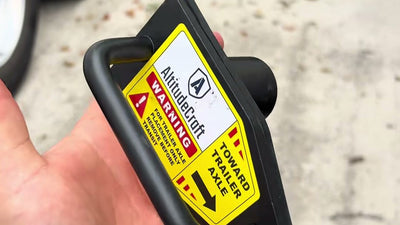
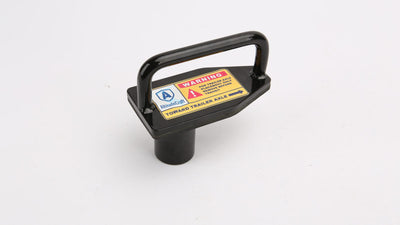
AltitudeCraft Tandem Slide Stopper for Semi Truck
$39.99
Free shipping & free returns on US orders $25+
Add to cartHow to read a CAT Scale ticket comes down to four numbers: steer, drive, trailer and gross. Check gross against 80,000 lb and each tandem group against 34,000 lb on the Interstate. If one tandem group is over and the other has room, slide toward the room, then divide the overage by one hole’s weight for the hole count.
The tool for this job
AltitudeCraft Tandem Slide Stopper for Semi Truck
$39.99
Free shipping & free returns on US orders $25+
Add to cartKey Takeaways
- A ticket has four lines. Steer, drive and trailer are measured weights, and gross is their sum. The scale reports weight, not legality, so you must supply the limits from federal and state rules.
- Check every line, and do the subtraction. The federal Interstate limits are 80,000 lb gross and 34,000 lb per tandem group. State limits on other roads can differ.
- A slide only trades weight between drive and trailer. Trailer over and drives with room: slide toward the rear. Drives over and trailer with room: slide toward the cab.
- Holes are an estimate. One hole moves about trailer weight × hole spacing ÷ kingpin-to-rear-axle distance. Divide the overage by that and round up.
- Weigh again after the slide. A printed ticket cannot be altered, so the second ticket shows the real split. Keep both.
AltitudeCraft Tandem Slide Stopper
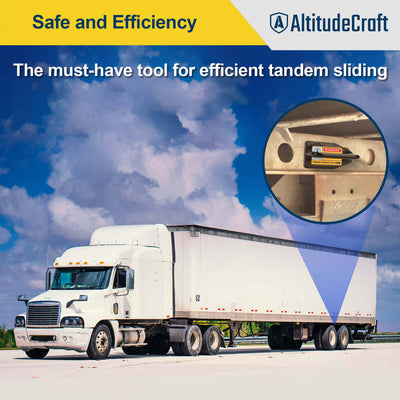
A magnetic carbon-steel stopper. Insert it a set number of holes from the end of the slider box (the frame that holds the tandem axles) before you slide, so the slider box stops against it. Remove it before you drive. 1-year warranty; a 3-year extended warranty can be applied for on altitudecraft.com.
What Is on a CAT Scale Ticket?
A CAT Scale ticket lists each axle group’s measured weight plus a gross total. On a standard rig, the steer axle sits on platform 1, the drive axle on platform 2 and the trailer axle on platform 3, all weighed at once. CAT Scale says a printed ticket “can not be altered or edited in any way.”
CAT Scale locations are private truck scales, often at truck stops. AltitudeCraft is not affiliated with CAT Scale; the name only identifies the tickets this article describes. The scale’s own How To Weigh page shows where to position the truck. CAT Scale says a trailer with widely spaced axles is weighed in two positions instead of one, so follow the posted instructions or call the scale’s help desk. Each ticket carries a number; you will want it if you reweigh.


How to Read a CAT Scale Ticket: What Do the Steer, Drive and Trailer Lines Mean?
Read each line as a measured weight and compare it with its own limit. Steer is checked against the axle rule and tire rating, drive and trailer against 34,000 lb on the Interstate, and gross against 80,000 lb. The scale prints weights only. It never prints a legal limit.
| Ticket line | What it measures | Compare it with |
|---|---|---|
| Steer | Front axle of the tractor | The applicable axle rule and tire rating (Interstate single-axle ceiling: 20,000 lb) |
| Drive | Tandem under the rear of the tractor | 34,000 lb on the Interstate; non-Interstate roads may differ |
| Trailer | Tandem at the rear of the trailer | 34,000 lb on the Interstate; non-Interstate roads may differ |
| Gross | Sum of the three lines | 80,000 lb on the Interstate |
Here is how to read a CAT Scale ticket in three steps:
- Add steer, drive and trailer. The total should match gross.
- Subtract each reading from its limit. A negative result is how far that group is over; a positive result is its room.
- Compare the overage with the other group’s room. Only if the room covers the overage is a slide worth considering.
These checks are a first pass. The Bridge Formula and state kingpin-distance limits can still apply, and our complete sliding guide covers them.
The limits come from the Federal Highway Administration’s Bridge Formula Weights page. On the Interstate, “single axles are limited to 20,000 pounds,” axles “spaced more than 40 inches and not more than 96 inches apart (tandem axles) are limited to 34,000 pounds,” and “gross vehicle weight is limited to 80,000 pounds.”
For steer, TruckWeightInfo says a loaded combination typically reads 10,000–12,500 lb, and that the legal limit “depends on the applicable axle rule and tire ratings — not on a common target number.” The same page notes that sliding the trailer tandems changes the trailer and drive readings together.
Which Ticket Pattern Means You Should Slide Tandems?
Three questions, in order, tell you whether a slide can fix your ticket. Is gross over 80,000 lb? Do drive and trailer add up to more than 68,000 lb? Is one tandem group over while the other has room to cover the overage? Sliding moves weight between those two groups; it does not remove any.
| Can a slide fix this ticket? | Answer | What to do |
|---|---|---|
| 1. Gross over 80,000 lb | No | Reduce the freight |
| 2. Drive plus trailer over 68,000 lb (twice 34,000) | Not by sliding alone | Move the fifth wheel forward to shift drive weight to the steer, if the steer has room, then slide; otherwise take freight off |
| 3. One tandem group over 34,000 lb, the other has room at least equal to the overage | Yes | Slide toward the group with room, then count holes (see the section below) |
| 4. Everything within these limits | Not needed for these limits | Leave the tandems; Bridge Formula and state rules can still apply |
Read the table top to bottom, and check steer separately. A steer reading over its rating usually needs a change in fifth wheel position or cargo placement; a tandem slide helps little.
If the two readings add up to more than twice 34,000, no hole position makes both groups legal by sliding alone, because a slide changes the split, not the total. For the direction, the complete sliding guide has the cheat sheet: trailer over, toward the rear; drive over, toward the cab.

What Does a Worked Ticket Look Like?
These two tickets are illustrative, not real, and each adds up. The first is tight on both tandem groups, so sliding cannot make it legal. The second has a trailer group over and drives with room, so a slide toward the rear can work.
| Line | Ticket A (illustrative) | Ticket B (illustrative) |
|---|---|---|
| Steer | 11,600 lb | 11,900 lb |
| Drive | 33,200 lb | 31,800 lb |
| Trailer | 35,000 lb | 35,300 lb |
| Gross | 79,800 lb | 79,000 lb |

Ticket A. Gross passes at 79,800 lb. The trailer is 1,000 lb over 34,000 and the drives have 800 lb of room. Move 800 lb and the trailer is still 200 lb over; move 1,000 lb and the drives are 200 lb over. The tandems total 68,200 lb against 68,000, so sliding alone cannot fix it. Moving the fifth wheel forward shifts drive weight to the steer and gives the drives room, and then a slide can work if the steer can take it. Otherwise take freight off.
Ticket B. The trailer is 1,300 lb over and the drives have 2,200 lb of room. Any move of at least 1,300 lb and less than 2,200 lb brings both groups to 34,000 lb or under, and the direction is toward the rear. The next section turns that range into holes.
How Do You Turn a Ticket Into a Direction and a Hole Count?
Name the direction from the group that is over, estimate what one hole moves, then divide the overage by that figure and round up. One hole moves about the Trailer line × hole spacing ÷ kingpin-to-rear-axle distance. It is an estimate, so the reweigh has the last word.
- Direction. Trailer group over: slide toward the rear, so weight moves onto the drives. Drive group over: slide toward the cab, so weight moves onto the trailer axles.
- Weight per hole. Multiply the Trailer line by your hole spacing in inches, then divide by the kingpin-to-rear-axle distance in inches. Measure both on your own trailer. This is a quick rule of thumb: it reads about 5 to 10% low when you slide toward the cab, because the trailer pivots on the centre of the tandem, not the rear axle. The Tandem Slide Calculator uses the exact lever math.
- Holes. Divide the overage by the weight per hole and round in the direction that leaves both groups under their limits. Then check the length limits before you slide toward the rear.
The formula is the one in our tandem slide chart, which tabulates the per-hole figure for a range of loads.
Ticket B, worked. Assume 6 in holes and 38 ft (456 in) to the rear axle. One hole moves 35,300 × 6 ÷ 456 = about 464 lb. The trailer is 1,300 lb over, and 1,300 ÷ 464 = 2.8, which rounds up to 3 holes toward the rear. Three holes move about 1,393 lb, leaving the trailer near 33,907 lb and the drives near 33,193 lb. The trailer is only about 93 lb under the limit, so the reweigh matters. Three holes also lengthen the kingpin-to-rear-axle distance by 18 in, to about 39.5 ft, which is under California’s 40 ft limit.
For a drive-over ticket, the same steps point toward the cab. Drives at 35,100 lb and trailer at 31,000 lb, with 6 in holes and 40 ft, come to about 388 lb per hole and 3 holes toward the cab.
What Mistakes Make a Ticket Misleading?
A ticket misleads when it does not match the rig you will drive. The usual causes are axles on the wrong platform, a widely spaced trailer axle set weighed in one position, a load that changed after weighing, and reading only gross.
- Axles on the wrong platform. The combination has to be on the scale as the instructions show, steer on platform 1, drive on 2, trailer on 3. If you were off, pull off and weigh again.
- Reading only gross. TruckWeightInfo warns: “A gross reading of 79,000 lb can still involve a drive tandem violation if that group reads above 34,000 lb.” Check every line, not just the total.
- Weighing a different load. If cargo moves or is unloaded after the ticket prints, the numbers describe a rig you no longer have. Weigh after the load is final.
- Treating the ticket as clearance. The same page says: “A scale ticket is a self-check record. It is not a permit, not route authority, and not a guarantee that the vehicle is legal at the next enforcement point.” Check the route rules too.

Why Weigh Again After You Slide?
Weigh again because only a new ticket shows what the slide actually did. The first ticket describes the rig before the move. TruckWeightInfo calls the second weigh “the practical way to confirm whether sliding tandems, moving the fifth wheel, or adjusting cargo changed the axle group you intended to change.”
CAT Scale’s FAQ lists four conditions for its reduced-price reweigh. Check its current terms before you rely on them.
- The same vehicle, tractor and trailer.
- The customer presents the full-price ticket, and its number is recorded on the reweigh ticket.
- The reweigh is from the same scale as the full-price ticket.
- The reweigh is within 24 hours of the full-price ticket.
When the second ticket prints, run the same three steps. Steer, drive and trailer should still add up to gross, gross should stay about the same, and both tandem groups should now sit at or under their limits. For Ticket B the estimate says the drives near 33,193 lb and the trailer near 33,907 lb; a real ticket will differ somewhat. If the trailer still reads over, slide one more hole, and check the length limit first. If the drive group has crossed its limit instead, the slide went too far. Then check the bridge and route rules.
So keep the first ticket, and plan the slide near the scale you used.

How Do You Stop the Tandems on the Right Hole?
Verdict: read all four lines, check gross against 80,000 lb and drive plus trailer against 68,000 lb, and slide only toward the group with room. Divide the overage by the weight per hole for your hole count, set a stopper that many holes out, slide, and weigh again.
The AltitudeCraft Tandem Slide Stopper is a carbon-steel unit with a built-in magnet, $39.99 on altitudecraft.com as of October 2026. Insert it that many holes from the end of the slider box, on the side the tandems move toward. Move the tractor slowly until the slider box stops against it, lock the slider pins, then remove the stopper before you drive. Rail hole size varies, so check fit on the product page first.

Frequently Asked Questions
How to read a CAT Scale ticket when deciding whether to slide tandems?
Check gross, then drive plus trailer against 68,000 lb, then which group is over. That tells you whether to slide and which way. For the hole count, divide the overage by one hole’s weight, the Trailer line × hole spacing ÷ kingpin-to-rear-axle distance, and round up. Then weigh again.
How many holes should I slide after weighing?
Divide the overage by the weight one hole moves, then round in the direction that leaves both groups under their limits. With the trailer at 35,300 lb, 6 in holes and 38 ft to the rear axle, one hole moves about 464 lb, so a 1,300 lb overage is about 3 holes. It is an estimate, so weigh again.
What should the steer axle read?
TruckWeightInfo says a loaded rig typically reads 10,000–12,500 lb, but the legal limit depends on the axle rule and tire ratings. FHWA’s Interstate single-axle ceiling is 20,000 lb.
Is a ticket proof I am legal?
No. A ticket records measured weight only. Legal limits, including the Bridge Formula, come from federal, state, route and permit rules, so check the roads you will run.
Do I need a new ticket after sliding?
Yes. A ticket describes the rig as it was weighed, so only a new ticket records the split after a slide. Keep both tickets and their numbers.
Which line moves when I slide tandems?
The trailer and drive lines move by about the same amount in opposite directions. Gross should stay about the same because the freight has not changed.
What if my ticket does not add up?
Steer, drive and trailer should sum to gross. If they do not, do not guess: confirm you are reading the right lines of the right ticket, ask the scale’s help desk, and weigh again.
Related Articles
- Sliding Tandem Axles: The Full Trucker Guide
- Tandem Slide Chart: How Much Weight Moves Per Hole
- Tandem Slide Stopper: Magnetic vs Manual Compared
- Tandem Slide Stopper for Dry Van and Reefer Trailers
- Tandem Sliding Guide: all our articles in one place
- Tandem Slide Calculator: How Many Holes to Slide
Set the stop before you slide.
AltitudeCraft Tandem Slide Stopper: magnetic, carbon steel. Remove it before you drive. 1-year warranty; a 3-year extended warranty can be applied for on altitudecraft.com.
By AltitudeCraft Gear Lab. AltitudeCraft Gear Lab is the product team behind AltitudeCraft tools. Disclosure: AltitudeCraft makes the Tandem Slide Stopper mentioned in this article. CAT Scale is named only to describe its tickets; AltitudeCraft is not affiliated with it, and its logo is not used. The ticket numbers are illustrative. This guide reflects public sources and our own reasoning, not a product test, and it does not replace your carrier’s procedure or training. Sources: CAT Scale Company, “How To Weigh” and FAQ; Federal Highway Administration, Bridge Formula Weights; TruckWeightInfo.com, “CAT Scale Ticket Terms for Truck Axle Weights.” Last updated: October 2026.
Featured in this guide
AltitudeCraft Tandem Slide Stopper for Semi Truck
$39.99
Free shipping & free returns on US orders $25+
Add to cart